

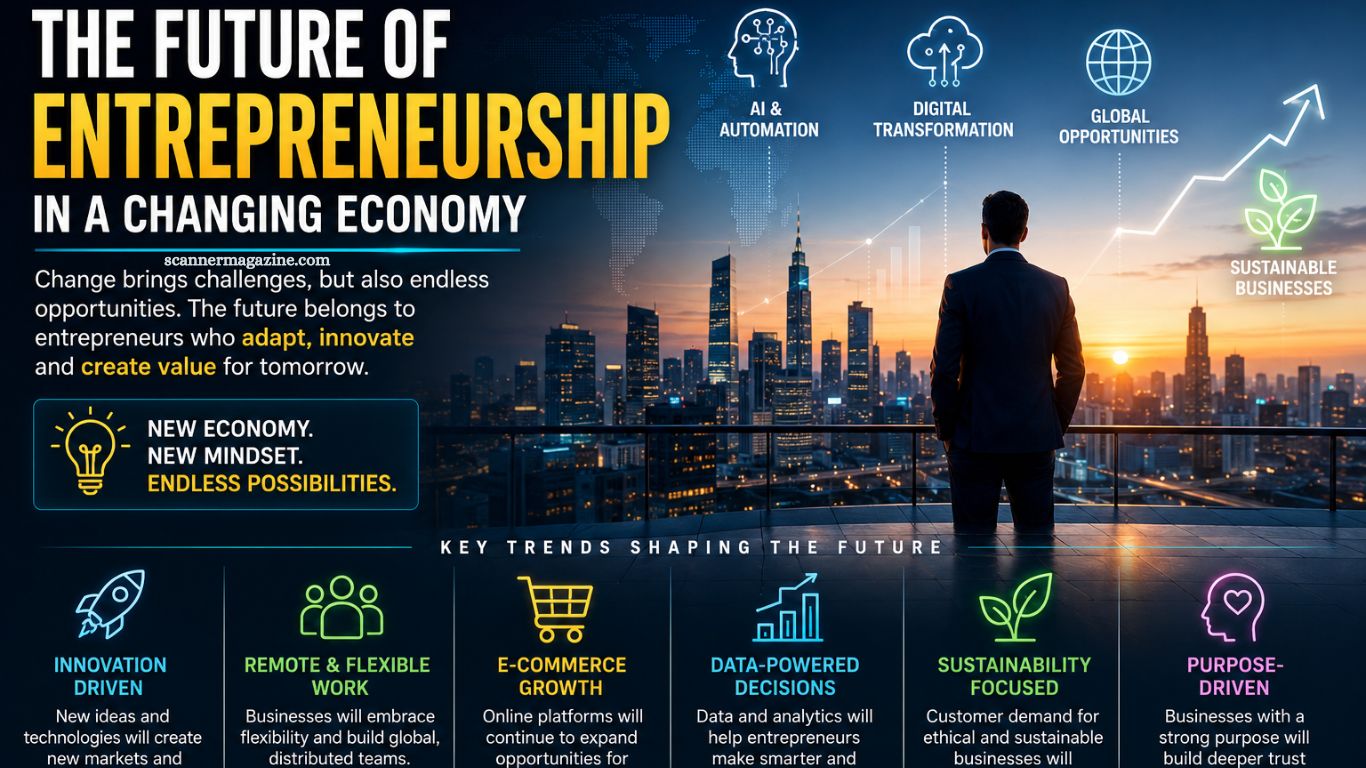
Entrepreneurship continues to evolve as technology, consumer behavior, global markets, and economic conditions reshape the business landscape. New opportunities are emerging across digital services, artificial intelligence, sustainable products, remote work, fintech, e-commerce, and specialized online businesses. Entrepreneurs who understand these changes can identify new markets and build businesses designed for long-term growth.
The modern economy rewards flexibility, innovation, and strong decision-making. Traditional business models remain valuable, yet entrepreneurs increasingly need digital skills, data awareness, financial discipline, and customer-focused strategies. Understanding the future of entrepreneurship can help new and experienced business owners prepare for changing market conditions and create sustainable ventures.
Read More: Technology Insights Every Digital User Should Know
How the Economy Is Changing Entrepreneurship
Economic changes directly influence how businesses are created, funded, operated, and scaled. Inflation, changing consumer spending, technological development, supply chain shifts, and evolving employment patterns are encouraging entrepreneurs to rethink traditional approaches.
Small businesses can now reach international customers without maintaining a physical presence in every market. Digital payment systems, online marketplaces, cloud platforms, and social media have lowered several barriers to entering competitive industries.
This shift creates opportunities for entrepreneurs with limited resources. A focused idea, strong online presence, and efficient operating model can support business growth without requiring the infrastructure once associated with large companies.
Technology Will Shape the Next Generation of Businesses
Technology will remain one of the strongest forces influencing entrepreneurship. Artificial intelligence, automation, cloud computing, data analytics, and digital communication tools are helping businesses improve productivity while reducing repetitive work.
AI-powered tools can support customer service, content creation, market research, sales analysis, and administrative tasks. Automation can allow small teams to handle workloads that previously required larger workforces.
Successful entrepreneurs will not necessarily need to become technology experts. They will need to understand how technology can solve business problems, improve customer experiences, and create measurable efficiency.
Artificial Intelligence and Entrepreneurial Opportunities
Artificial intelligence is creating new business opportunities across nearly every major industry. Entrepreneurs can develop AI-based products, consulting services, automation solutions, educational platforms, and specialized software for specific customer needs.
AI also gives existing businesses opportunities to improve operations. Companies can analyze customer behavior, personalize marketing, automate workflows, and identify patterns within large datasets.
The strongest opportunities will likely come from solving real problems rather than simply adding AI to an existing product. Entrepreneurs who combine industry knowledge with practical AI applications can create valuable and defensible business models.
The Rise of Digital Entrepreneurship
Digital entrepreneurship is becoming increasingly accessible. Freelancing, online education, content businesses, software services, e-commerce, digital consulting, and subscription-based platforms allow individuals to build companies around specialized skills.
Social media has also changed how entrepreneurs connect with customers. A strong personal brand can generate awareness, establish credibility, and create direct relationships with a target audience.
Digital businesses can often operate with lower overhead than traditional companies. This makes experimentation easier and allows entrepreneurs to test ideas before making major investments.
Sustainability Will Influence Business Decisions
Environmental concerns are becoming an important factor in consumer and business decisions. Entrepreneurs are exploring sustainable packaging, renewable energy solutions, environmentally responsible products, recycling systems, and resource-efficient services.
Sustainability can also improve operational efficiency. Reducing energy consumption, minimizing waste, and optimizing supply chains can lower costs while supporting environmental goals.
Future entrepreneurs may increasingly view sustainability as part of their core business strategy rather than simply a marketing concept.
Changing Consumer Expectations
Modern consumers expect convenience, transparency, personalization, and responsive customer service. Businesses that fail to understand these expectations can struggle even when their products are competitive.
Customers increasingly research products online, compare prices, read reviews, and evaluate brand reputation before making purchasing decisions. Entrepreneurs must therefore build trust across multiple digital channels.
Personalized experiences can also strengthen customer loyalty. Data-driven insights can help businesses understand preferences and deliver more relevant products, services, and communication.
The Importance of Financial Resilience
Economic uncertainty makes financial management a critical entrepreneurial skill. Rising costs, changing demand, interest rates, and unexpected market disruptions can place pressure on businesses.
Future-focused entrepreneurs should prioritize healthy cash flow, realistic budgets, controlled expenses, and diversified revenue opportunities. Strong financial planning can provide greater flexibility during difficult economic periods.
Businesses that maintain financial discipline are often better positioned to invest in technology, marketing, talent, and expansion when new opportunities appear.
Remote Work and Global Entrepreneurship
Remote work has expanded access to talent and customers around the world. Entrepreneurs can build distributed teams, work with independent professionals, and serve international markets without establishing traditional offices.
This model creates opportunities for businesses that value specialized expertise. A company can recruit talent based on skills rather than geographical proximity.
Global entrepreneurship also introduces challenges involving communication, regulations, taxes, time zones, and cultural differences. Entrepreneurs need strong systems to manage these complexities effectively.
New Business Models Will Continue to Emerge
Subscription services, marketplaces, digital products, memberships, creator businesses, and platform-based companies are changing how entrepreneurs generate revenue.
Recurring revenue models can provide greater predictability when customers receive ongoing value. Marketplace models can connect buyers and sellers without requiring the business to own large inventories.
The future will likely bring additional hybrid models combining physical products, digital services, artificial intelligence, and community-driven experiences.
Skills Future Entrepreneurs Need
Entrepreneurial success will depend on more than having a good idea. Business owners will need strong communication, financial literacy, problem-solving ability, adaptability, marketing knowledge, and digital awareness.
Leadership will also become increasingly important. Entrepreneurs must build teams that can respond quickly when markets change.
Continuous learning can provide a significant advantage. Industries evolve rapidly, making outdated knowledge less valuable over time. Entrepreneurs who regularly improve their skills can respond more effectively to new opportunities.
Challenges Facing Future Entrepreneurs
The future of entrepreneurship will bring significant opportunities alongside serious challenges. Competition is increasing as digital tools make business creation easier. Customers have more choices, making differentiation increasingly important.
Cybersecurity, data privacy, regulatory changes, economic volatility, and technology adoption can also create risks. Entrepreneurs must understand these challenges before scaling their businesses.
Another major challenge involves maintaining a human connection in an increasingly automated economy. Technology can improve efficiency, but strong relationships, trust, creativity, and empathy remain important competitive advantages.
How Entrepreneurs Can Prepare for the Future
Future-ready entrepreneurs should focus on building adaptable businesses. Instead of relying on one product, platform, customer group, or marketing channel, businesses can develop flexible strategies that allow them to respond to market changes.
Customer feedback should play an important role in decision-making. Regularly evaluating customer needs can reveal emerging problems and new opportunities.
Entrepreneurs should also experiment carefully. Testing a product, marketing strategy, or business model on a smaller scale can provide valuable information before significant resources are committed.
The Future of Entrepreneurship
The future of entrepreneurship will be shaped by adaptability, technology, innovation, and changing consumer expectations. Economic uncertainty may create challenges, but it can also reveal new market gaps and encourage entrepreneurs to develop better solutions.
Businesses that combine strong fundamentals with modern technology are likely to remain competitive. Entrepreneurs who focus on solving meaningful problems, understanding customers, managing finances responsibly, and continuously developing their skills can build stronger foundations for long-term success.
Entrepreneurship is no longer limited to traditional companies or physical locations. The changing economy is creating a broader business landscape where individuals, small teams, and established organizations can innovate in new ways. The entrepreneurs prepared to learn, adapt, and act on emerging opportunities will be best positioned for the next stage of economic growth.
Frequently Asked Questions
What is the future of entrepreneurship?
The future of entrepreneurship will focus on technology, innovation, adaptability, sustainability, and changing customer expectations.
How is technology changing entrepreneurship?
Technology helps entrepreneurs automate tasks, reduce costs, reach global customers, analyze data, and develop new products.
Is AI important for future entrepreneurs?
Yes. AI can improve productivity, customer service, marketing, research, and business decision-making.
What skills will entrepreneurs need?
Future entrepreneurs will need digital literacy, financial management, communication, leadership, creativity, and problem-solving skills.
How can entrepreneurs handle economic uncertainty?
Entrepreneurs can build financial reserves, control expenses, diversify revenue, understand customers, and maintain flexible business strategies.
Will small businesses benefit from digital entrepreneurship?
Yes. Digital platforms allow small businesses to reach wider audiences while reducing several traditional operating costs.
Conclusion
The future of entrepreneurship will be defined by adaptability, innovation, technology, and resilience. Changing economic conditions may create challenges, yet they also open opportunities for entrepreneurs willing to identify new needs and develop practical solutions. Businesses that embrace digital transformation, understand customers, manage finances carefully, and continue learning can build stronger foundations for long-term growth.

1 Comment
Pingback: Business Habits Shared by Successful Entrepreneurs - Scanner Magazine