

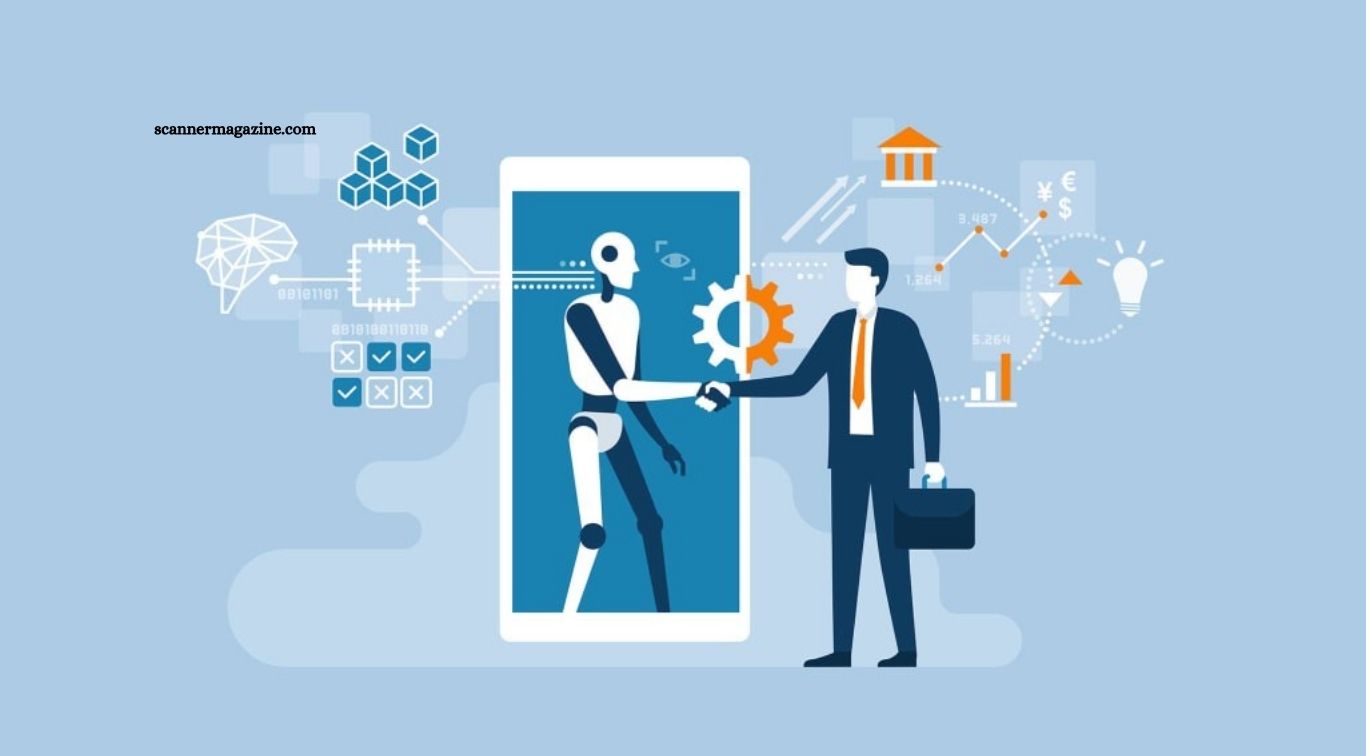
Artificial intelligence has become a powerful force shaping modern business operations. Companies across industries use AI technologies to improve productivity, automate repetitive processes, analyze large amounts of information, strengthen customer experiences, and support faster decision-making. AI adoption continues to expand as organizations search for practical ways to reduce operational complexity while improving performance.
Modern AI solutions support departments ranging from customer service and marketing to finance, logistics, manufacturing, cybersecurity, and human resources. Businesses no longer view artificial intelligence only as an experimental technology. AI increasingly serves as an operational resource capable of supporting everyday activities, identifying patterns, predicting outcomes, and helping employees complete complex tasks efficiently.
Read More: Business Expansion Tips for New Entrepreneurs
AI Automation Improves Operational Efficiency
Automation represents one major impact of AI on business operations. Traditional business processes often involve repetitive tasks requiring considerable employee time. AI-powered systems can handle many routine activities automatically, allowing employees to concentrate on strategic, creative, or customer-focused responsibilities.
Businesses can use AI automation for invoice processing, document classification, appointment scheduling, inventory updates, data entry, customer inquiries, and workflow management. Automated systems can complete repetitive tasks quickly while maintaining consistent processes.
Greater automation can also reduce operational bottlenecks. Employees spend less time handling routine administrative work, while organizations gain additional capacity for projects requiring human judgment.
AI Supports Faster Business Decisions
Business leaders regularly make decisions involving customers, finances, operations, employees, and market opportunities. AI can process large datasets and identify meaningful patterns that might otherwise require extensive manual analysis.
Predictive analytics tools can examine historical information alongside current trends. Companies can use resulting insights for demand forecasting, pricing strategies, inventory planning, financial management, and customer behavior analysis.
AI does not eliminate human decision-making. Effective implementation combines machine-generated insights with professional experience, business knowledge, ethical judgment, and appropriate oversight.
Customer Service Becomes More Responsive
Customer expectations continue rising across digital channels. People increasingly expect quick answers, personalized experiences, and convenient support. AI-powered customer service tools help businesses respond efficiently while maintaining service availability.
Chatbots and virtual assistants can answer common questions, provide order information, guide customers through basic processes, and direct complex cases toward human representatives. AI systems can also analyze previous customer interactions to provide relevant recommendations.
Human support remains essential for sensitive, unusual, or complicated situations. Successful customer service strategies combine AI efficiency with human communication and empathy.
Marketing Gains Greater Personalization
Artificial intelligence has transformed marketing operations by helping businesses understand audience behavior more effectively. AI systems can analyze browsing patterns, purchase histories, campaign results, customer interests, and engagement data.
Marketing teams can use these insights to create more relevant campaigns and improve audience segmentation. AI tools can support content planning, advertising optimization, email personalization, lead scoring, and performance analysis.
Personalization can improve customer engagement when businesses use customer information responsibly. Strong privacy policies, transparent data practices, and appropriate security controls remain essential for maintaining consumer trust.
Supply Chain Management Becomes Smarter
Supply chains involve numerous moving parts, including suppliers, transportation, inventory, warehouses, production schedules, and customer demand. Artificial intelligence can help organizations coordinate these activities more effectively.
AI-powered forecasting systems can analyze previous sales, seasonal patterns, inventory levels, supplier performance, and changing demand. Better forecasts can help businesses maintain appropriate stock levels while reducing unnecessary inventory expenses.
Logistics teams can also use AI for route planning, delivery scheduling, warehouse operations, and disruption analysis. Faster access to operational insights can help companies respond effectively when unexpected problems appear.
Financial Operations Gain Greater Accuracy
Finance departments handle large volumes of structured information, making financial operations suitable for AI-assisted automation. AI technologies can support expense management, transaction analysis, budgeting, forecasting, fraud detection, and financial reporting.
Machine learning systems can identify unusual transaction patterns requiring further investigation. Automated tools can also classify expenses, process invoices, and organize financial information.
Businesses should maintain strong human oversight for important financial decisions. AI outputs require verification, especially when decisions involve regulatory requirements, significant investments, credit, taxes, or financial risk.
Human Resources Benefits From AI Tools
Human resources teams increasingly use artificial intelligence for administrative and analytical tasks. AI can support candidate screening, employee scheduling, workforce planning, training recommendations, and internal knowledge management.
Automation can reduce time spent on repetitive HR processes, giving professionals more opportunities to focus on employee development, workplace culture, and strategic workforce planning.
Responsible implementation remains especially important within employment decisions. Businesses should monitor AI systems for potential bias, maintain transparency, protect employee information, and ensure meaningful human review for decisions affecting workers.
AI Strengthens Cybersecurity Operations
Growing digital operations create greater cybersecurity responsibilities. AI-powered security systems can analyze large amounts of network activity and identify suspicious patterns faster than purely manual monitoring.
Security teams can use AI for threat detection, fraud monitoring, unusual login identification, malware analysis, and incident prioritization. Automated alerts can help specialists investigate potential threats before damage becomes severe.
AI cannot replace comprehensive cybersecurity practices. Businesses still require secure configurations, access controls, employee training, software updates, backups, incident response plans, and experienced security professionals.
Generative AI Changes Knowledge Work
Generative AI has introduced new possibilities across professional environments. Employees can use AI assistants to summarize documents, generate initial drafts, organize information, brainstorm ideas, analyze text, prepare meeting notes, and support research.
These capabilities can reduce time spent on routine knowledge work. Employees gain more time for problem-solving, communication, strategy, and creative thinking.
Companies need clear policies governing generative AI usage. Confidential information, intellectual property, factual accuracy, data security, and human review deserve careful consideration before AI-generated material enters important workflows.
AI Creates New Business Opportunities
Artificial intelligence offers more than operational improvements. It can also support innovation and new revenue opportunities. Businesses can develop AI-powered products, personalized services, intelligent platforms, automated solutions, and data-driven customer experiences.
Smaller businesses can benefit as AI tools become more accessible. Cloud-based platforms allow organizations to access advanced capabilities without developing complex AI infrastructure internally.
Successful adoption depends on selecting technology that solves genuine business problems rather than implementing AI simply because competitors use it.
AI Adoption Brings Important Challenges
Artificial intelligence provides substantial advantages, yet implementation creates several challenges. Businesses may face concerns involving data quality, cybersecurity, privacy, employee training, system integration, regulatory compliance, algorithmic bias, and implementation costs.
Poor-quality data can produce unreliable AI results. Excessive dependence on automation can create operational problems when systems make errors or encounter unfamiliar situations. Employees may also require training to understand how AI tools should support their responsibilities.
Organizations need governance frameworks defining acceptable AI usage, accountability, security requirements, testing procedures, and human oversight. Responsible management helps businesses gain value while controlling potential risks.
Human Skills Remain Essential
AI changes job responsibilities, but human expertise remains central to successful business operations. Machines can process information rapidly, recognize patterns, and automate predictable tasks. Humans provide leadership, creativity, ethical reasoning, emotional intelligence, negotiation, and contextual understanding.
Future workplaces will likely depend heavily on collaboration between people and intelligent systems. Employees capable of using AI effectively can combine technological speed with human judgment.
Businesses should therefore invest in workforce training alongside AI technology. Digital literacy, critical thinking, data skills, communication, and AI awareness can help employees adapt successfully.
Future Impact of AI on Business Operations
Artificial intelligence will continue influencing how businesses manage everyday activities. Greater automation, predictive analytics, intelligent assistants, personalized customer experiences, and advanced decision-support systems will become increasingly integrated across organizations.
Companies gaining sustainable value from AI will likely focus on practical applications, reliable data, employee training, security, responsible governance, and measurable business outcomes. Technology alone cannot guarantee operational success.
AI works best when supporting clear objectives and capable employees. Organizations combining intelligent technology with strong human expertise can create faster, more flexible, and more efficient operating models.
Frequently Asked Questions
How does AI improve business operations?
AI automates routine tasks, improves data analysis, reduces errors, and supports faster business decisions.
Can AI reduce business operating costs?
Yes. AI can reduce costs through automation, better resource management, improved forecasting, and increased employee productivity.
How does AI improve customer service?
AI chatbots and virtual assistants provide quick responses, personalized support, and continuous customer assistance.
What business areas benefit most from AI?
Marketing, finance, customer service, human resources, cybersecurity, supply chains, and operations management benefit significantly.
What challenges come with AI adoption?
Major challenges include implementation costs, data privacy, cybersecurity risks, employee training, bias, and inaccurate AI outputs.
Will AI replace employees in businesses?
AI may automate certain tasks, but human creativity, judgment, communication, leadership, and problem-solving remain essential.
Conclusion
The impact of AI on business operations reaches nearly every major organizational function. Artificial intelligence can automate repetitive work, improve decision-making, enhance customer service, strengthen marketing, optimize supply chains, support financial processes, and improve cybersecurity monitoring. Successful AI adoption requires more than installing new software. Businesses need quality data, skilled employees, responsible governance, security controls, and continuous human oversight.

1 Comment
Pingback: Common Business Challenges and Smart Solutions - Scanner Magazine