

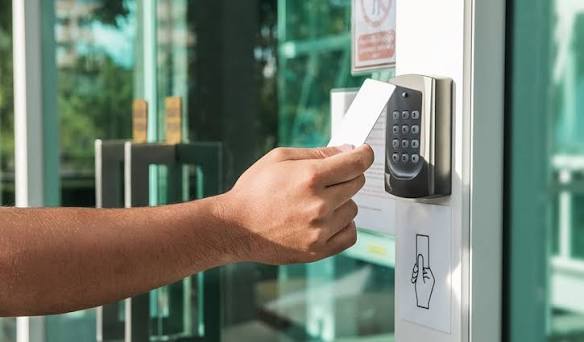
Every business has something worth protecting—whether that’s sensitive data, valuable equipment, or the people who show up to work every day. Yet many organizations still rely on traditional lock-and-key systems that offer little visibility into who enters their premises and when. Access control systems change that, giving businesses a smarter, more reliable way to manage security from the ground up.
The Evolution of Access Control Systems
Access control has come a long way from a deadbolt on a back door. Early systems were purely mechanical—if you had the key, you had access. Simple enough, but also easy to exploit. Lost keys, duplicated copies, and zero audit trails made those systems a liability more than a safeguard.
Modern access control systems are built on digital infrastructure. Key cards, PIN codes, biometric scanners, and mobile credentials have replaced physical keys. Cloud-based management platforms let administrators grant or revoke access remotely, in real time. For commercial security, this shift has been transformative—less guesswork, more control.
Key Benefits of Modern Access Control for Businesses
The most obvious benefit is security, but access control systems deliver far more than that.
Reduced risk of unauthorized entry: Unlike traditional keys, digital credentials are tied to specific individuals. If an employee leaves, their access can be deactivated instantly—no lock replacement needed.
A complete audit trail: Every entry and exit is logged. This level of visibility is especially valuable for commercial security in regulated industries, where knowing who accessed a server room or storage area on a given date can be critical.
Flexible access levels: Not everyone needs access to every area. A tiered permission system ensures that employees can only enter spaces relevant to their role, reducing internal risks.
Integration with other security tools: Modern systems can connect with CCTV cameras, alarm systems, and visitor management platforms, creating a unified commercial security ecosystem rather than a collection of disconnected tools.
Operational efficiency: Automated scheduling means doors can lock and unlock based on business hours—removing the need for someone to physically secure the building each night.
Types of Access Control Systems
Choosing the right system depends on your business size, layout, and specific security needs. Here’s a quick overview of the main options:
- Keypad/PIN systems: Cost-effective and easy to manage, though PINs can be shared or forgotten.
- Key card and fob systems: Widely used across commercial properties; easy to deactivate if lost.
- Biometric systems: Use fingerprints, facial recognition, or iris scans for high-security environments.
- Mobile access systems: Employees use smartphones as credentials, reducing the need for physical cards.
- Cloud-based systems: Allow remote management and real-time monitoring, ideal for multi-site businesses.
Each option has trade-offs. Biometric systems offer strong security but come at a higher cost. Mobile access is convenient but depends on device compatibility. The right fit is the one that aligns with your operational reality.
Implementing Access Control for Enhanced Commercial Security
Rolling out an access control system is a process, not a one-day project. Start by auditing your current setup—identify high-risk areas, map out who needs access to what, and determine whether your existing infrastructure (wiring, door frames, network) can support new hardware.
From there, work with a licensed security integrator to design a system that scales with your business. Consider future growth: a system that works for 20 employees today should be able to handle 200 employees tomorrow without a full overhaul.
Staff training matters just as much as the technology itself. Employees need to understand how to use the system correctly, what to do if they lose a credential, and why access protocols exist. Security culture starts with people.
Ongoing maintenance is equally important. Test your systems regularly, review access logs for anomalies, and update permissions when staff roles change. Commercial security isn’t a set-and-forget investment—it requires consistent attention to stay effective.
A Safer Future for Your Business
Access control is one of the most practical steps a business can take to strengthen its commercial security posture. The technology is more accessible than ever, the benefits are measurable, and the risks of doing nothing continue to grow.
Physical security and digital security are no longer separate conversations. As workplaces evolve—with hybrid teams, shared spaces, and multiple locations—having a flexible, auditable, and reliable access control system isn’t a luxury. It’s a baseline expectation for any serious business.
Start by asking the right questions: Where are your vulnerabilities? Who has access that they shouldn’t? What would a security breach cost you? The answers will make the path forward clear.
